
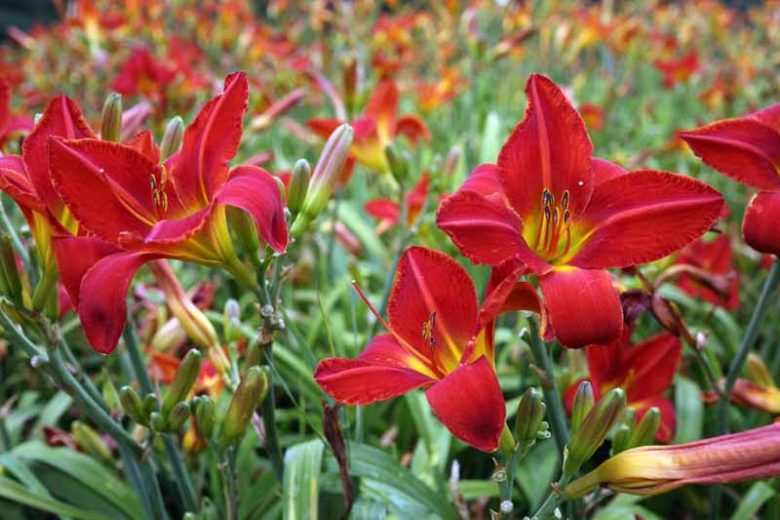
Tight garden spaces ask for discipline. A plant that is beautiful in a broad border can overwhelm a narrow bed, crowd a path, or make a small courtyard feel busy. Small and miniature daylilies offer a different kind of usefulness. They bring the familiar strength of daylilies into places where scale matters as much as color. The premier grower of Daylily plants SwallowtailDaylilies advises gardeners to treat small daylilies as design tools, not as lesser versions of larger plants. Compact clumps can solve real problems in narrow beds, front edges, courtyard gardens, and places where a full-sized plant would make the planting feel crowded.
For gardeners working with close views and narrow beds, small and miniature daylily plants for sale can be considered for scale-conscious planting where full-sized clumps would feel too heavy.
The best choices are often the ones that fit the space so naturally that the garden looks larger, not fuller. Compact plants can define edges, repeat color, and bring summer bloom close to the viewer without demanding more room than the bed can give. In smaller gardens, restraint is not a compromise; it is often the design principle that makes the flowers easier to enjoy.
Why Small Plants Can Make a Big Design Difference
A small plant can have a large design effect when it is placed where people see it often. In a narrow bed by a walk, a compact daylily may be noticed more than a taller plant hidden in a deep border. Scale creates intimacy. The flower is close enough to appreciate, but the clump does not dominate the route.
Small and miniature forms also help keep proportions comfortable. In a courtyard, entry bed, or container-adjacent planting, large daylilies may feel out of scale with furniture, paving, or nearby shrubs. Compact clumps maintain the feeling of a garden without making the space seem crowded. They add life while respecting the limits of the site.
Design impact comes from repetition as well. Several small clumps can guide the eye along an edge or around a corner without creating a heavy mass. Because each plant occupies less visual weight, the gardener can build rhythm gently. That is often exactly what tight spaces need.
Small plants can also change how a limited space is perceived. Oversized plants often make a small bed feel even smaller because they reveal the lack of room around them. Compact daylilies do the opposite when used well. They leave visible space for mulch, companions, and the edge of the bed, which allows the eye to read the planting as intentional. A small clump with good proportion can make a courtyard or narrow path feel more refined. The design feels scaled to the place rather than forced into it.
A small plant can also make close details more meaningful. Visitors may notice the flower shape, throat color, and foliage texture because the plant is near eye and hand. Compact scale invites attention without overwhelming the space.
Choosing Tight Spaces That Still Have Enough Light
A tight space is not automatically a good planting space. Daylilies still need adequate light, reasonable soil, and enough moisture to establish. Narrow beds beside walls, fences, or paving may be sunny at one time of day and shaded at another. They may also dry quickly because of reflected heat or nearby roots. These conditions should be checked before planting.
Small plants are sometimes placed in leftover corners simply because they fit. That can be a mistake. A compact daylily deserves a site where it can perform, not a neglected slot. If the space is too shaded, too dry, or too difficult to water, the plant may survive but fail to show its best ornamental value.
The right tight space has both visibility and support. A sunny edge, a small bed near a patio, the front of a mixed border, or a narrow strip with improved soil can all work well. The plant should feel chosen for the site, not squeezed into it.
Enough light can be difficult in tight spaces because walls, fences, and nearby shrubs create shifting shade. It is worth watching the site at several times of day before planting. Morning sun may be gentle and useful, while late afternoon shade may protect flowers in hot conditions. In another space, the opposite may be true. Compact daylilies are not a substitute for site assessment. Their small size solves scale problems, but they still need the basic resources that allow them to grow, flower, and return with strength.
Light in a tight space should be measured by where the crown sits, not only by where the flowers will open. A bloom may reach light while the base remains shaded. The whole plant needs enough energy to return well.
Building Edges, Corners, and Narrow Beds
Edges are one of the strongest uses for compact daylilies. Their foliage can create a soft line without spilling too far, and their flowers bring seasonal interest to the front of the planting. Along a path, this can make the route feel welcoming. Along a patio, it can make the seating area feel connected to the garden.
Corners need special care because they often collect visual clutter. A small daylily can brighten a corner without blocking the view or creating a bulky mass. Paired with low companions and a simple background, it can turn an awkward pocket into a deliberate planting moment.
Narrow beds benefit from restraint. It is better to repeat a few compact clumps with good spacing than to fill the strip with too many different plants. The eye reads a narrow bed quickly, so the pattern should be clear. Small daylilies provide enough structure to make the pattern visible without overwhelming the bed.
Edges, corners, and narrow beds benefit from repeated restraint. A single compact daylily can be charming, but a sequence of them can create a more finished design. The spacing should allow each clump to be seen as an individual while still forming a rhythm. In a corner, one well-placed clump may be enough if paired with a low companion and a clean mulch layer. In a narrow bed, three related clumps may guide the eye better than a mixture of many small plants. Simplicity is often what makes tight planting feel generous.
Edges and corners benefit from repetition, but the repeats should not become a crowded row. Leaving small intervals of companion foliage or mulch keeps the design breathable. In limited space, breathing room is a design feature.
Pairing Miniature Forms With Companion Plants
Companion plants are especially important in small spaces because every plant is close to the viewer. Fine-textured perennials, low groundcovers, small grasses, and compact shrubs can all help miniature daylilies feel integrated. The companions should support the daylily’s scale rather than compete with it.
Texture contrast prevents the planting from looking like a row of similar mounds. A small daylily beside a creeping plant, a fine grass, or a small-leaved perennial can look more refined than a daylily surrounded by plants of the same shape. The contrast makes each plant easier to appreciate.
Color should be handled carefully. In a tight space, strong color can be wonderful, but too many unrelated colors can feel chaotic. Repeating one daylily color or pairing it with a restrained companion palette often produces a calmer and more polished effect.
Companion plants should be chosen with mature scale in mind. A plant sold in a small pot may later spread beyond the daylily and dominate the bed. This is especially risky in tight spaces where there is little room for correction. Good companions stay in proportion, offer contrast, and do not steal the limited soil. Small grasses, compact perennials, and well-behaved groundcovers can all work, but each should be evaluated for habit as much as appearance. A miniature daylily looks best when its neighbors respect its scale.
Companions should be scaled to the mature clump, not the first season. A small daylily surrounded by fast spreaders may vanish by year two. Choosing restrained partners keeps the planting balanced as it fills in.
Managing Scale, Spacing, and Seasonal Care
Small plants still need breathing room. Because they take less space, gardeners may be tempted to pack them tightly. That can reduce air movement, make watering less effective, and create a crowded look as clumps mature. Spacing should allow each plant to show its form and allow the gardener to maintain the bed.
Seasonal care is usually simple. Water well during establishment, keep mulch neat, remove spent stems in highly visible areas, and trim tired foliage if it distracts from the design. In a tight space, these small tasks have a large visual payoff because the planting is seen close up.
Division may eventually be useful, even with compact forms. A refreshed clump can flower better and maintain a clean scale. Divisions can also repeat a successful plant in another small area, extending the design without introducing a new color or habit.
Seasonal care in tight spaces should be neat but not fussy. Because the planting is close to paths, doors, or seating areas, spent stems and tired foliage are more visible. A quick cleanup can have a strong effect. At the same time, cutting too severely can make the bed look bare. The best approach is selective care: remove what distracts, keep what still supports the plant, and maintain a clean edge. This measured care lets compact daylilies remain attractive without turning the small bed into a high-pressure display.
Seasonal care should protect proportion. Removing spent stems can make a compact plant look refreshed, but cutting too much foliage may leave an empty spot. Care should preserve the small plant’s role in the overall pattern.
Small-Space Planting That Stays Purposeful
The best small-space planting feels purposeful from the beginning. Each plant earns its place through scale, color, foliage, and ease of care. Small and miniature daylilies are valuable because they can bring summer bloom to places that cannot carry large perennials comfortably. They make the garden feel detailed rather than crowded.
Purpose also comes from editing. A tight bed may need fewer plants than the gardener first imagines. Leaving a little open space around compact daylilies can make the flowers easier to see and the whole planting more elegant. Fullness should come from maturity, not from overplanting on the first day.
In the end, compact daylilies prove that small does not mean secondary. Used well, they can define edges, improve close views, repeat color, and solve difficult scale problems. For gardeners working with limited room, that combination is both practical and highly ornamental.
Purposeful small-space planting also depends on accepting limits. A tight bed cannot hold every color, form, or companion that a gardener admires. It needs a clear idea. That idea might be a warm edge along a path, a cool pocket near a bench, or a compact summer display by an entrance. Small and miniature daylilies are excellent for these focused roles because they bring flower, foliage, and perennial reliability at a manageable scale. Their value is strongest when the gardener chooses clarity over crowding.
Purpose is what keeps tight gardens from feeling crowded. When each daylily has a clear role, the space can hold color and variety without confusion. Compact plants are most valuable when every placement feels deliberate.
The final measure of success is whether the small space feels easier to enjoy. A compact daylily should not make the gardener worry about crowding, blocked paths, or constant correction. It should bring color at the right scale and make the bed feel intentional. When that happens, the limited space becomes a strength, encouraging close observation and careful design rather than compromise. Small clumps invite close looking, and close looking is one of the quiet pleasures that makes a compact garden memorable. The planting succeeds when the scale feels calm from the first glance and remains comfortable as the clumps mature.