
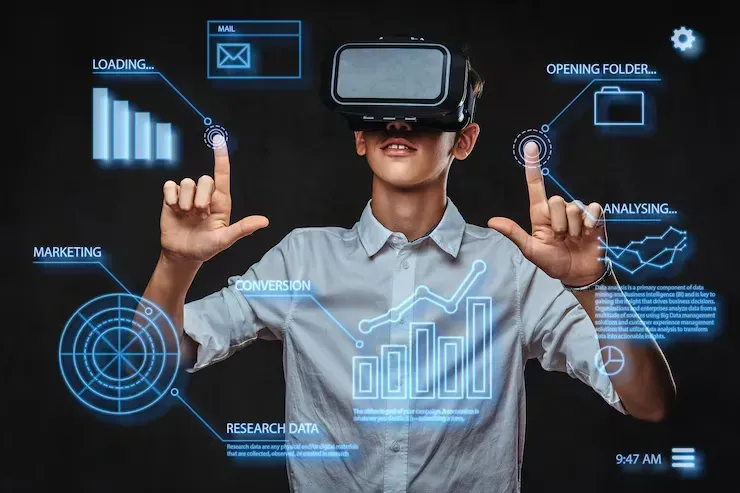
The relationship between humanity and technology has reached an unprecedented inflection point. Tools that once existed solely within the realm of speculative fiction have seamlessly integrated into contemporary routines. As computing power continues to scale exponentially and data networks achieve near-instantaneous latency, the division between the physical and digital worlds is rapidly dissolving.
The trajectory of technological progress is no longer defined by isolated breakthroughs or independent hardware releases. Instead, it is driven by a profound convergence of intelligence engines, automated systems, decentralized architectures, and advanced biotechnology. This structural shift is fundamentally altering the mechanics of daily existence, changing how individuals work, communicate, manage their health, and interact with their surroundings. This analysis explores the core technologies shaping the future and their long-term implications for the fabric of everyday life.
The Ambient Intelligence and Autonomous Systems Paradigm
The concept of a smart device is undergoing a massive evolutionary shift. Early iterations of home and workplace automation relied on explicit user inputs, requiring individuals to configure schedules, tap mobile interfaces, or issue direct voice commands. The future of daily life belongs to ambient intelligence, an ecosystem where technology operates invisibly in the background, anticipating human needs through continuous context awareness.
This shift depends on the widespread deployment of edge computing, which processes vast streams of sensory data locally on the device rather than routing it to distant cloud data centers. By evaluating real-time behavioral patterns, environmental changes, and biometric indicators, the modern living environment can adjust itself dynamically.
-
Predictive Environmental Calibration: Living spaces will automatically optimize indoor air quality, thermal baselines, and lighting spectrums based on the stress markers, sleep cycles, and immediate activities of the occupants.
-
Frictionless Resource Management: Household appliances will transition into fully autonomous operational nodes, independently monitoring inventory levels, running predictive self-maintenance protocols, and ordering eco-friendly supplies without requiring human intervention.
-
Autonomous Last-Mile Logistics: The movement of goods within local municipalities will rely on coordinated networks of autonomous delivery rovers and unmanned aerial vehicles, altering the layout of urban architecture and eliminating traditional consumer retail delays.
The Transformation of Professional Ecosystems and Cognitive Augmentation
The nature of labor is shifting away from routine administrative tasks toward a model focused entirely on high-level cognitive synthesis and creative execution. Intelligence platforms are no longer viewed merely as automation utilities designed to replace manual processes; they are becoming essential cognitive partners that expand human capability.
In professional environments, this cognitive augmentation allows individuals to process massive, disparate datasets instantaneously. Complex legal reviews, architectural designs, market predictions, and software developments are executed via collaborative iterations between human strategy and computational power. This acceleration demands a continuous focus on educational adaptability, as the modern workforce must transition toward a permanent model of skill updating to keep pace with changing software capabilities.
Furthermore, the physical workspace is detaching from geographic constraints. Advanced spatial computing platforms and high-fidelity virtual environments allow distributed teams to collaborate within shared digital workspaces with total physical realism. This transition reduces the operational necessity of urban commercial centers, allowing individuals to design their lifestyles around personal preference and community health rather than proximity to a physical corporate headquarters.
Preventive Biotechnology and Hyper-Personalized Healthcare
The historical model of medicine has been inherently reactive, focusing on treating diseases after symptoms manifest. The integration of advanced gene editing, continuous biometric monitoring, and predictive modeling is shifting healthcare toward a highly precise, preventive framework that maximizes the human healthspan.
Wearable biological sensors have evolved far beyond basic step counters and resting heart rate trackers. Modern non-invasive diagnostics continuously analyze blood chemistry, interstitial fluid metrics, metabolic markers, and neurological indicators. This data stream acts as an early warning system, identifying physiological anomalies weeks before physical symptoms occur.
-
Genomic Customization: The utilization of advanced gene therapeutics allows medical professionals to neutralize hereditary disease vectors before they can express themselves structurally within the patient.
-
Algorithmic Pharmacogenomics: Prescription medicine will move away from standardized mass production. Pharmaceuticals will be synthesized dynamically based on the exact genomic profile and real-time metabolic rate of the individual, maximizing efficacy while eliminating adverse side effects.
-
Micro-Scale Interventional Robotics: Biocompatible nanobots operating within the circulatory system will perform localized cellular repair, eliminate arterial blockages, and target malignant cells with surgical precision, reducing the need for highly invasive surgical operations.
Decentralization and the Architecture of Digital Trust
As daily life becomes increasingly digital, the mechanisms regulating security, identity, and personal data ownership require a fundamental overhaul. Centralized data repositories have become prime targets for sophisticated cyber threats, resulting in widespread identity vulnerability and institutional distrust.
The future of everyday transactional security relies on decentralized ledger systems and cryptographic identity protocols. These frameworks return data sovereignty back to the individual. Rather than trusting private corporations or centralized servers with sensitive personal files, individuals will maintain their credentials within secure, decentralized identities.
Whether executing a real estate transaction, verifying educational credentials, or participating in civic voting, cryptographic validation guarantees total authenticity and privacy without requiring a third-party intermediary. This architectural shift eliminates systematic administrative friction, drastically reduces fraud, and establishes a secure baseline for global digital interactions.
Redefining the Consumer Journey through Immersive Commerce
The traditional retail journey is transforming as physical spaces merge with spatial digital overlays. The historical boundary between physical retail stores and digital e-commerce websites is disappearing, replaced by an integrated ecosystem known as immersive commerce.
Through spatial computing headsets and advanced optical displays, the consumer environment becomes an interactive catalog. Individuals can visualize how furniture looks inside their actual living spaces, test clothing via perfect digital avatars that match their exact physical dimensions, and experience simulated travel excursions before booking a flight.
This hyper-visual customization reduces the operational rate of product returns, optimizes global supply chain manufacturing, and allows artisan creators to access global markets directly. The consumer experience shifts from a transactional chore into a highly personalized form of experiential curation.
Frequently Asked Questions
How will edge computing protect user privacy in an era of ambient intelligence?
Unlike traditional cloud systems that require devices to stream raw audio, video, and biometric data to centralized corporate servers for processing, edge computing analyzes data locally on the physical hardware within your home or office. This means your personal behavioral patterns and raw sensory inputs never leave your private network, allowing intelligence engines to customize your environment without compromising your personal privacy.
What is the distinction between a human healthspan and a human lifespan?
The human lifespan refers strictly to the total number of years an individual remains alive. The healthspan, conversely, measures the period of a person life spent free from chronic, debilitating disease and physical decline. The primary objective of modern biotechnology is to extend the healthspan to match the lifespan, ensuring that aging individuals retain full cognitive function, physical mobility, and vitality throughout their later years.
How will the rise of autonomous delivery networks impact urban traffic patterns?
Autonomous delivery infrastructure shifts the distribution of goods away from traditional peak hours and large, human-operated delivery vehicles. Coordinated networks of micro-rovers and automated aerial drones operate continuously throughout the day and night using predictive distribution algorithms, reducing urban congestion, lowering carbon outputs, and minimizing the necessity for massive parking infrastructures.
Will the transition to spatial computing isolate individuals from physical communities?
While spatial computing enhances digital connectivity over long distances, its core design is engineered to blend digital elements seamlessly into the physical world rather than replacing it entirely. By allowing users to view digital notifications, collaborative workspaces, and interactive data layers directly within their physical environment, spatial computing prevents individuals from being locked into isolated screens, encouraging natural interaction with their physical surroundings.
What are smart grids and how do they optimize daily energy utilization?
Smart grids are modernized electricity networks that use real-time sensors, automated routing, and decentralized energy storage to balance power supply and demand dynamically. In everyday life, a smart grid communicates directly with your home appliances, automatically scheduling power-intensive tasks, such as charging an electric vehicle, during periods of peak renewable energy production or low grid demand, lowering consumer utility bills and reducing environmental strain.
How does genomic tracking differ from standard clinical lab work?
Standard clinical lab work provides a static snapshot of an individual current biological state, tracking metrics like blood glucose or cholesterol levels at a single moment in time. Genomic tracking analyzes the underlying DNA structure of an organism, identifying permanent genetic predispositions, hereditary risk factors, and unique cellular traits. This comprehensive blueprint allows medical professionals to design long-term preventive lifestyle strategies tailored perfectly to the patient biology.