
Walnut trees have long been associated with traditional orchards and large rural estates, yet in recent years they have increasingly appeared in ordinary British gardens. The shift is partly driven by gardeners looking for productive trees that offer both practical and ornamental value. A mature walnut provides shade, structure and a crop of nutritious nuts, while its broad canopy and textured bark make it an impressive feature in any landscape.
British gardeners are also becoming more confident about growing nut trees thanks to improved nursery varieties and better information about rootstocks and site selection. Although walnuts were once considered difficult to establish in the UK climate, modern cultivars have proved reliable across much of England and Wales, and even parts of southern Scotland.
Many buyers first encounter the idea while browsing listings for walnut trees for sale, often alongside more familiar orchard trees such as apples, pears or plums. The temptation to add one to the garden can be strong, but specialists frequently advise that a walnut should never be chosen casually. Unlike smaller fruit trees, it can live for decades and grow to a considerable size, meaning the initial decision carries long-term consequences for the garden’s layout.
The fruit trees specialists at ChrisBowers often highlight that careful selection is the key to success when purchasing walnut trees for sale. They recommend considering the final size of the tree, the suitability of the variety for the British climate, and the long-term position in the garden before committing to a purchase. In their experience, gardeners who plan these aspects early are far more likely to enjoy reliable harvests and healthy growth.
Interest in walnuts also reflects a broader revival of home orcharding across Britain. As people look for sustainable food sources and more characterful gardens, trees that combine beauty with productivity are gaining renewed appreciation. Walnuts fit naturally into this trend. However, choosing the right tree requires an understanding not only of varieties but also of how walnuts behave over many years. An orchard specialist will usually emphasise three core buying considerations that determine whether a walnut becomes a treasured garden feature or an awkward mistake.
Tip One: Understand the Ultimate Size Before Buying
The first and perhaps most important consideration when buying a walnut tree is its eventual size. Unlike many orchard trees that are grafted onto strongly dwarfing rootstocks, walnuts tend to grow into large, commanding specimens. Even varieties described as moderately vigorous can reach heights of ten to fifteen metres if left unpruned.
For a British gardener accustomed to compact apple trees trained on dwarfing rootstocks, this can come as a surprise. A walnut tree planted in the wrong position may eventually overshadow lawns, patios or neighbouring properties. In a small suburban garden, this growth habit can quickly create problems.
An orchard specialist would usually advise viewing a walnut not merely as a fruit tree but as a landscape tree with edible benefits. The canopy becomes broad and spreading, producing deep shade in summer. While this shade can be welcome during warm weather, it also affects nearby planting. Grass and many ornamental plants struggle beneath mature walnut trees due to reduced light.
There is also the matter of the root system. Walnuts develop extensive roots that spread widely through the soil. This does not necessarily mean they damage foundations, but it does mean the surrounding area should be planned carefully. Planting too close to buildings or boundaries should be avoided.
Modern nurseries sometimes offer varieties that remain slightly smaller or more upright in growth. Even so, these trees still require generous space. A sensible rule for most British gardens is to allow a planting distance of at least eight metres from structures and other large trees. In larger rural properties or smallholdings, of course, the tree can be allowed to develop naturally without such restrictions.
The specialist approach therefore begins with scale. Before browsing catalogues or searching online listings, gardeners should first stand in their garden and imagine the mature tree. Visualising the eventual canopy can prevent many of the mistakes that occur when enthusiasm outruns planning.
Tip Two: Choose a Variety Suited to the British Climate
The second major factor concerns variety selection. While walnut trees are hardy in Britain, not every cultivar performs equally well in the UK’s maritime climate. Some varieties originate from warmer regions of Europe and require longer summers than most British gardens can reliably provide.
An orchard specialist will normally suggest varieties known for early ripening and dependable cropping. These cultivars begin growth slightly later in spring, reducing the risk of frost damage to young shoots. Late spring frosts can occasionally harm walnut blossoms, particularly in inland areas where cold air settles overnight.
Early-ripening varieties also ensure that the nuts mature fully before autumn weather turns damp and cool. In Britain, the difference of just a few weeks can determine whether a crop ripens properly or remains underdeveloped.
Another consideration is pollination. Some walnuts are partially self-fertile, meaning they can produce nuts on their own, but yields improve significantly when another compatible variety is planted nearby. In larger gardens or orchards, planting two varieties can noticeably increase productivity.
British growers also pay attention to disease resistance and adaptability to varying soil types. Walnuts prefer well-drained soil that retains moisture but does not remain waterlogged in winter. Heavy clay soils may require some preparation before planting, while very sandy soils might benefit from organic matter to improve water retention.
When gardeners search for walnut trees for sale, they often encounter a range of unfamiliar names. Rather than choosing purely on description, it is worth consulting specialist nurseries that provide clear guidance on how each variety performs in the UK. Nurseries with orchard experience can recommend cultivars proven to crop reliably in British conditions.
Selecting the right variety transforms the walnut from a risky experiment into a dependable garden asset. It is the difference between a tree that struggles for years and one that settles quickly and begins producing nuts within a reasonable timeframe.
Tip Three: Buy From a Reputable Specialist Nursery
The third buying tip focuses on the source of the tree itself. Walnut trees are long-term investments, and their success often depends on the quality of the young tree at the time of purchase. Specialist nurseries that focus on fruit and nut trees typically offer stronger plants, carefully grafted and grown under controlled conditions.
A well-produced walnut tree should have a healthy root system, a straight central stem and clearly developed graft union if it has been grafted. Poorly grown trees may have weak roots or irregular growth, which can slow establishment after planting.
Specialist nurseries also provide advice on planting technique, soil preparation and aftercare. Walnuts in particular benefit from thoughtful planting because their roots dislike disturbance once established. A well-prepared planting hole and careful positioning can greatly improve early growth.
When evaluating walnut trees for sale, buyers should pay attention to whether the nursery lists the rootstock and age of the tree. Younger trees often establish more easily than older, larger specimens because their root systems adapt more quickly to new soil conditions.
Another advantage of specialist nurseries is the accuracy of their variety descriptions. Reliable suppliers ensure that each tree is correctly labelled and propagated from genuine stock. For gardeners hoping to grow specific cultivars with known characteristics, this accuracy matters greatly.
Reputable nurseries may also offer trees at different stages of development, such as maiden trees or slightly older specimens. Choosing between them depends on the gardener’s patience and expectations. Younger trees cost less and establish quickly, while older trees may begin cropping sooner but require careful handling during planting.
The principle remains straightforward: buying from a trusted nursery greatly increases the likelihood of long-term success.
Preparing Your Garden Before the Tree Arrives
Even the best walnut tree will struggle if the planting site is poorly prepared. Orchard specialists often stress that preparation should begin well before the tree arrives from the nursery.
The first task is choosing the right position. Walnuts prefer open, sunny locations where they can receive full light for most of the day. Shelter from strong winds is also helpful, particularly in exposed rural areas where young trees can be rocked by winter gales.
Soil preparation plays a significant role in early establishment. The planting area should be cleared of weeds and enriched with organic matter such as well-rotted compost or manure. This improves soil structure and provides a steady supply of nutrients during the first growing seasons.
Drainage must also be considered carefully. Walnuts tolerate moist soils but dislike standing water. If the soil remains wet during winter, raising the planting area slightly or improving drainage channels can prevent root problems.
Another often overlooked aspect is spacing from other trees. Because walnuts grow large and cast substantial shade, they should not be planted too close to existing fruit trees. Apple and pear trees in particular benefit from open light and may struggle if overshadowed by a developing walnut canopy.
Support during the early years can help stabilise the young tree. A sturdy stake placed beside the trunk prevents wind movement that could disturb the roots before they are fully established. However, the stake should eventually be removed once the tree has developed a strong anchoring system.
Preparing the site thoroughly ensures that when the tree is planted it can focus immediately on growth rather than recovery from poor conditions.
Long-Term Care and Expectations for Walnut Trees
One reason walnut trees appeal to British gardeners is their relatively low maintenance once established. Unlike many fruit trees, they require minimal pruning and generally grow into a natural, balanced shape.
During the first few years, watering during dry spells is essential. Young walnut trees benefit from consistent moisture while their root systems expand into the surrounding soil. Mulching with organic material helps retain moisture and suppress weeds.
Pruning should be approached cautiously. Walnuts are known to bleed sap heavily if pruned during winter or early spring. Most specialists recommend carrying out any necessary pruning in mid to late summer when sap flow is reduced. In many gardens, pruning is limited to removing damaged or poorly positioned branches.
Patience is also important. Walnut trees rarely produce significant crops immediately. Depending on the variety and age at planting, the first worthwhile harvest may take several years to appear. Once established, however, the tree can continue producing nuts for decades.
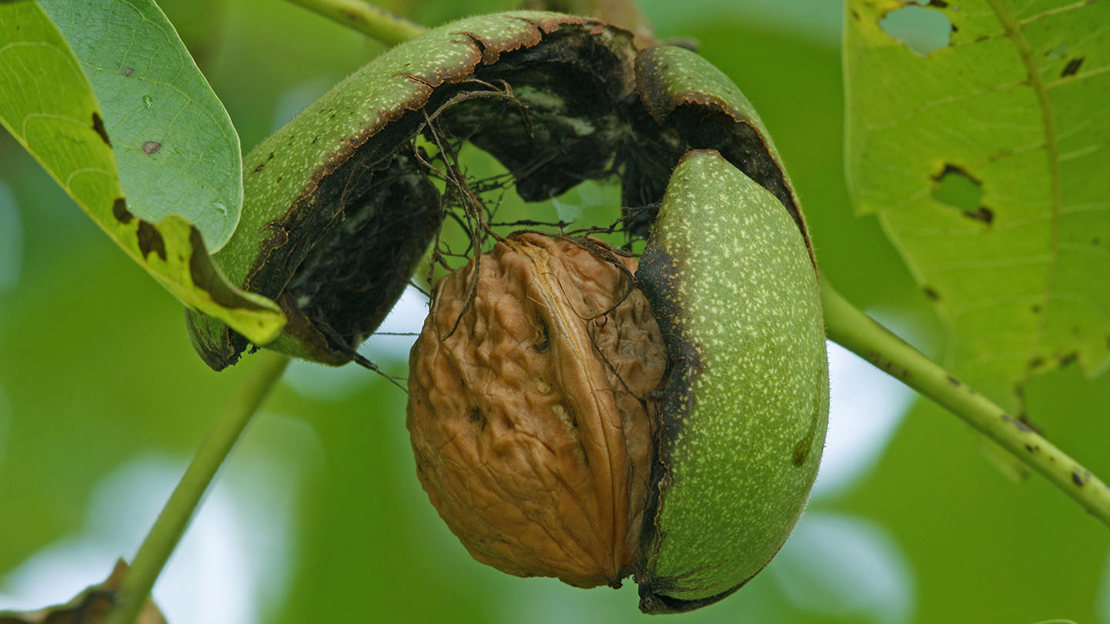
Harvesting usually takes place in autumn when the green husks split and the nuts fall to the ground. Gardeners simply collect them, remove the husks and allow the nuts to dry before storage.
Over time, the walnut tree becomes one of the most distinctive features of the garden. Its spreading branches provide summer shade, its leaves turn soft yellow in autumn, and the annual crop becomes a familiar seasonal event.
For British gardeners who approach the purchase thoughtfully, the walnut tree offers something few other garden plants can match: a combination of permanence, beauty and productivity that improves year after year. Careful buying decisions, guided by the practical advice of orchard specialists, ensure that this impressive tree becomes a lasting success rather than an avoidable regret.